KWIET NOISE // Free Will / ControlPage 02
Plate
Free Will / Control
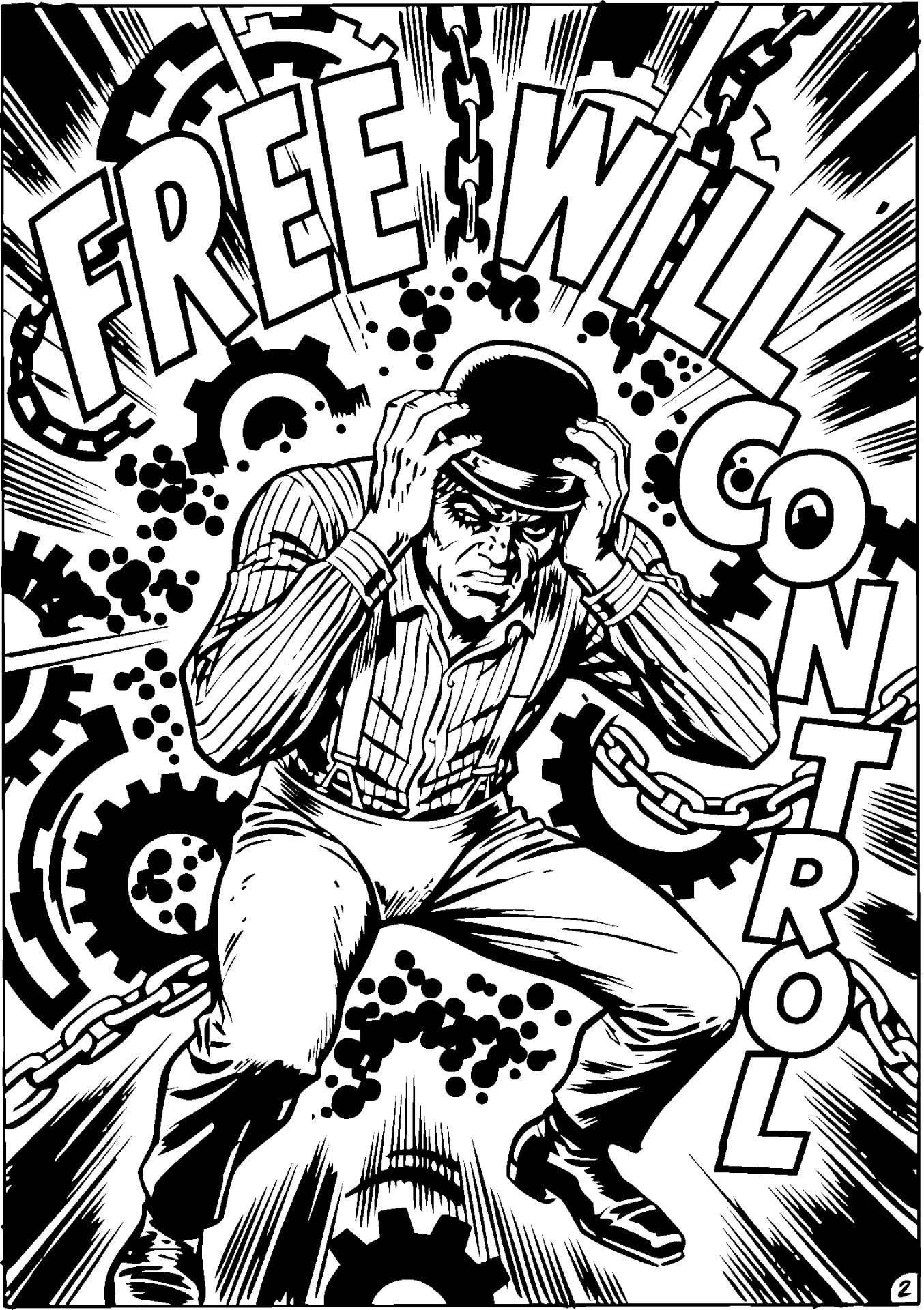
A working man holds his own head on while the gears keep turning behind him.
KWIET NOISE · Issue 01 · Free Will / Control02
A man holding his own head on while the gears keep turning — and an essay on who is working the handle.
Plate
A working man holds his own head on while the gears keep turning behind him.
Essay
The gears are not a metaphor for the factory. They are a diagram of the day: alarm, fare, shift, screen, feed, sleep.
Set direct from the typewriter
Track A — English
Every system that wants you compliant starts by making its own operation invisible. The timetable, the till, the till receipt, the algorithm that decides what you hear next: none of them announce themselves as instruments. They simply arrange the hours until arrangement feels like weather.
The plate opposite refuses that. It draws the mechanism at full size, chains included, so the argument can be had in daylight. You cannot negotiate with a machine you have agreed not to see.
What the drawing does
It puts the gears in the same frame as the man. No background, no excuse, no comfortable distance. The lettering does the shouting so the figure does not have to.
Track A — English
Control is cheapest when it is installed rather than enforced. The habit of anticipating what will be allowed does more work than any supervisor. That is the hand on the hat: holding the head down before anyone asks.
Kwiet Noise is a method for noticing the installation. Print it flat, label the tracks, put the evidence underneath, and let the reader check the working. Free will is not a feeling. It is an audit.
Track B — Symbol
Gear, chain, ruled order, refusal. Read left to right; the last mark is the only one you supply yourself.